
Before Story Became Story, Part Two: A Family Tested in 1916

Patty Wolfe’s diary from July through December records a frightening buggy accident, months of illness and caregiving, and the ordinary work that continued even in the midst of loss.
In Part One of Before Story Became Story, we met Patty Wilson Henderson Wolfe and explored her connection to the early history of Story, Wyoming. Her husband, Marshall Lee Wolfe, was one of the men who helped promote and develop the community beneath the Bighorn Mountains. But Patty’s diary gave us something different from land records and newspaper accounts: a window into the daily lives of the people behind that history.
The first half of 1916 followed Patty through a bitter Wyoming winter, family tragedy, an extensive trip into Canada and then back home again.
The second half of the year takes another turn.
From July through December 1916, Patty’s diary becomes increasingly centered on family, illness and caregiving. There are train trips and visitors, washing and ironing, church services and picture shows. There is also a terrifying buggy accident, a loved one whose health slowly declines over several months, and a Christmas celebrated only days after his death.
As before, Patty rarely explains how she feels.
She simply records what happened.
And then she gets up the next morning and keeps going.
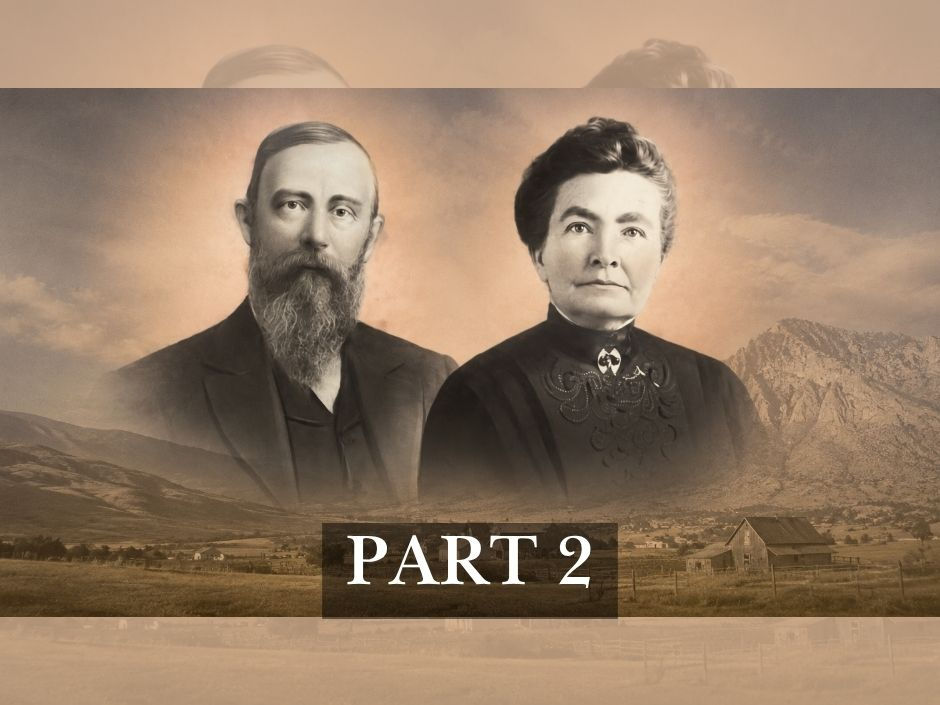
Summer Begins With Work and Another Journey
July opened much as the first half of Patty’s diary had ended.
There was bread to bake, butter to churn and housework to finish. On July 1, a man named Mr. Simmon finished painting the house while Patty recorded another ordinary day of work.
A few days later, family members traveled to Sheridan. With no one arriving to milk the cows one morning, Patty turned them out herself while she and the children fed the hogs. By July 5, the travelers returned home “hot, tired and dirty.”
Then came more difficult news.
On July 10, Patty recorded that Roy Wolfe had died the night before. An editorial note accompanying the diary identifies Roy as the son of Clinton and Eva Wolfe. Once again, death enters Patty’s diary almost without warning, appearing in the middle of entries about weather, meals, letters and chores.
Within days, Patty herself was traveling again.
On July 17 she began a long rail journey. She waited for a night train, reached Clearmont, continued to Alliance and finally arrived in Kansas City on July 19 before traveling on to Annie’s.
The entries are a reminder of just how mobile Patty and her family could be in 1916. A journey that today might be measured in hours required train connections, waiting, overnight travel and careful coordination with family at both ends.
But almost immediately after Patty arrived, another concern began appearing repeatedly in her diary.
His name was Eddie.
“Eddie Letton Is Very Low”
On July 20, Patty wrote that everyone went to the new house for the day.
Then she added:
“Eddie Letton is very low.”
Over the next several months, Eddie’s health would become one of the central threads running through Patty’s diary.
Some days he seemed better. Other days he was restless or weak. Hedrick and Frankie traveled back and forth. Doctors came. Family gathered. People sat with him and watched for changes.
On July 24, Patty thought Eddie was doing well, although by evening he had become tired and restless. Two days later she again recorded that he had enjoyed a good day. By the end of July, however, he had another difficult morning.
August would bring something no one appears to have expected.
And this time Patty herself would become the patient.
The Buggy Went Into the Ditch
On August 10, Patty spent part of the day sewing.
Later, Edna, Helen and Patty decided to go for a short drive.
They did not get far.
At the edge of town, the horse, Dandy, became frightened.
Patty recorded that the horse whirled around and:
“horse buggy and all go down in ditch.”
Annie was badly injured around her head, neck, shoulders and arms. Several wounds on her head and forehead had to be sewn.
Patty did not escape unharmed.
She suffered a broken rib, a broken finger, and serious bruising to her hip and knee.
The children, remarkably, were only bruised.
A car brought everyone home, and John and the doctor soon arrived.
The following day's entry says something about how communities responded to trouble in an era before emergency rooms were minutes away and family could be reached instantly by phone.
The house was “full of neighbors.”
People came.
They stayed.
They helped.
For days, the diary records doctors, nurses, visitors and family members moving in and out of the house. Annie struggled with her injuries and emotions. Patty slowly recovered from her own broken bones and bruises while continuing to pay attention to everyone around her.
On August 25, the doctor finally removed the splints from Patty’s hand and wrapped it.
Yet even while recovering from the wreck, Patty continued recording Eddie’s condition.
Caring for Someone Who Was Not Getting Better
By late August, Eddie was having increasingly difficult episodes.
On August 28, Patty wrote that he had experienced a hard time until the doctor arrived that evening. The following morning, she recorded giving him “2 Hypos” before he became easier.
On August 30, they had to call the doctor during the night.
Then, on August 31, Patty wrote that she had dosed Eddie twice during the night.
There is no dramatic commentary attached to these entries.
Just dates.
Treatments.
Doctors.
Visitors.
Whether he slept.
Whether he ate.
Whether he seemed stronger or weaker.
It is caregiving recorded one day at a time.
By September 4, Patty was becoming less hopeful.
She wrote:
“Eddie getting so weak.”
She added that he did not appear to be coming out of his suffering.
Yet his condition continued to fluctuate. There were good days among the bad ones. Doctors continued to visit, and Hedrick and other family members continued coming and going.
That uncertainty would continue for months.
And Still, Life Kept Moving
One of the most striking features of Patty’s diary is how illness never completely stops ordinary life.
There is always something else that must be done.
Laundry is washed.
Clothes are ironed.
Meals are prepared.
Letters are mailed.
Sewing is finished.
Family comes for supper.
Someone goes to the post office.
Someone else catches a train.
By September, Patty was cutting fabric, sewing, ironing and working around the house again. There was a circus in town on September 14. Later in the month there were church services, visits, automobile rides and trips into town.
On September 29, after the first big frost, Patty and others went to see The Birth of a Nation. That same entry also records ironing and a letter from Emma, entertainment and domestic work occupying the same few lines.
This is what makes the diary valuable.
Major events do not arrive with chapter headings.
They are woven directly into ordinary life.
Quilts, Church, Visitors and a New Treatment
October continued much the same way.
There was an Old Settlers Day gathering. There were church services, dinners, shopping trips, dental work, visitors and sewing.
Patty worked on quilts and clothing. She visited friends and family. She traveled by train. She baked bread and cake.
And throughout it all, Eddie remained sick.
On October 19, Patty recorded one of the more revealing medical entries in the diary. The doctor had begun using a “new serum” with Eddie in an effort to stop or destroy what she described as a “growth or tumor.”
Patty gives us no diagnosis beyond those words and no explanation of the treatment.
She simply records that they were trying something new.
A week later she thought he seemed better and wrote that the doctor believed the medicine was doing some good.
Hope had not disappeared.
Election Day and Waiting for the Results
There are small entries in Patty’s diary that also remind us exactly when we are reading.
November 7, 1916:
“Election day. Cloudy and windy.”
Patty had letters from Annie, Bird and Emma and spent part of the day putting a quilt together.
The next day she wrote:
“Have not got results as yet.”
There were no instant updates, television projections or phones buzzing with election alerts.
They waited for the news.
And while they waited, Patty and Aunt Bettie went out, worked on the quilt and wrote more letters.
Once again, a national event appears beside sewing and correspondence.
That was Patty’s world.
By November, the Signs Were Changing
As November continued, Eddie’s condition became more concerning.
On November 21, Patty wrote that he did not feel well.
The following day, the diary became more specific:
His feet were swelling.
Aunt Bettie telephoned Hedrick, who planned to come down on the afternoon train. Ruth was also asked to come.
Family began gathering again.
Still, Eddie rallied.
On November 23, Patty and Aunt Bettie went to see Eula and then attended a poultry show. Patty specifically noted that Eddie wanted them to go and that he seemed to be feeling better.
That detail is easy to overlook, but it is deeply human.
Even while seriously ill, Eddie apparently did not want everyone confined by his sickness.
For a while, life continued.
“Eddie’s 66th Birthday”
December began with another series of ordinary days.
Patty ironed.
She cut carpet rags.
She went to church.
She washed.
She sewed.
Then, on December 7, Hedrick telephoned.
“Uncle Ed” had suffered another bad spell, and Ruth wanted Patty to come.
The next morning Patty boarded the train. She reached Nevada around noon and arrived at approximately 2:15.
When she got there, she was relieved to find Eddie doing very well.
On December 11, the family marked a milestone:
“Eddie’s 66th birthday.”
The children came for supper. A cousin, Tillie Smith, arrived from Missoula.
For a man who had spent months seriously ill, it must have seemed like a day worth celebrating.
But the next morning Patty wrote that Eddie was not doing as well.
She wondered whether there had simply been too much company the previous day.
By December 14, her wording had changed again.
“Eddie getting weaker.”
Five Days After His Birthday
On December 16, Eddie had not rested well.
Then came what Patty called a “sinking spell.”
The doctor was called.
So was Ruth.
Eddie rallied for a time.
Then he died.
He had celebrated his 66th birthday only five days earlier.
The following day, the family held his funeral at the house.
Patty wrote that the flowers were beautiful and that there was “a big crowd.”
Family members came by train. Others stayed overnight.
And when they left for the cemetery, it was snowing.
Again, Patty offers no long reflection on death.
The details tell the story for her.
The house.
The flowers.
The crowd.
The family.
The snow.
“Eddie’s Been Dead a Week”
December 19 found the family beginning the difficult process of putting the house back in order. Eddie’s clothes were put away.
On December 20, Patty was washing again.
The furnace needed attention the next day.
There was housecleaning.
There were visits.
And then, on December 23, Patty wrote one simple sentence:
“Eddie’s been dead a week.”
The next day's entry turns toward Christmas.
Patty traveled to Annie’s. Aunt Bettie had plans with other family members.
Hedrick and Frankie were coming. Children had colds.
On December 25:
“All have a big Christmas.”
Uncle Al came down.
The family gathered.
Life continued.
History Is Often Found Between the Big Events
Patty Wolfe’s diary is not the kind of historical record that announces its importance.
There are no long political speeches.
There are no detailed explanations of the events surrounding her.
She writes about washing clothes.
Catching trains.
Making quilts.
Baking bread.
Waiting for letters.
Going to church.
Sitting with someone who is sick.
But that may be exactly why her diary matters.
The history of Story and the surrounding region was not created only by the people whose names appeared on plats, deeds, business advertisements and newspaper stories.
It was also created by families who endured broken bones without modern emergency medicine, traveled considerable distances by rail to care for one another, waited days for letters and news, sat beside sick relatives through the night and buried loved ones in the snow.
Patty recorded that world without knowing that more than a century later someone might read her words.
The People Behind Story
Marshall Wolfe's connection to Story places Patty's family alongside the beginnings of this community.
But Patty's diary allows us to look beyond Marshall's public role.
It shows the family behind the name.
The second half of 1916 was not an easy one for Patty. She received news of death in July, was injured in a buggy wreck in August, spent months watching Eddie struggle with serious illness and then stood with the family when he died in December.
Yet between those moments were hundreds of ordinary acts.
Meals prepared.
Letters written.
Clothes washed.
Quilts sewn.
Neighbors visited.
Trains met.
Children cared for.
Church attended.
Christmas celebrated.
That may be one of the clearest lessons Patty Wolfe leaves us.
History does not happen only in the extraordinary moments.
Much of it happens quietly, in the ordinary things people keep doing when life becomes difficult.
In Part One, Patty Wolfe helped us understand the world behind the map of early Story.
In Part Two, she shows us something even more personal:
the people behind that world, caring for one another, grieving together and continuing on.
This is Part Two of our look at the diary of Patty Wilson Henderson Wolfe and her family's connection to the early history of Story, Wyoming. Part Two covers July through December 1916.
Stay connected to the people, events, and stories that make Story and the surrounding communities special by liking and following the StoryWyoming.org Facebook page.


